The Ultimate Guide to Transparent Fulfilment Pricing
How to secure the **lowest Goods-In costs** for your eCommerce business with Beckdale Shipping
A service by Beckdale ShippingQuick Guide Navigation
Goods-In: The Core Pricing Model & The **£7.00 Cap**
At Beckdale Shipping, our commitment is to provide **transparent 3PL pricing** designed specifically for **UK small and medium eCommerce businesses**. We understand that hidden fees, especially for inbound stock processing (Goods-In), can erode margins and make financial planning impossible. Our model is built on usage and clarity.
Understanding Our Ultra-Low Goods-In Fee Structure
The Goods-In process is crucial; it’s when we accept **liability** for your inventory. While many 3PLs charge excessive hourly rates or high per-pallet fees, we use a simple, predictable calculation:
- A **Base Processing Fee** per delivery/return.
- A **Per Item Fee** (measured in fractions of a pence).
- A **Maximum Charge Capped at £7.00 per SKU**.
This cap is the cornerstone of our **cost-efficiency promise**. It means that receiving large volumes of a single product (a major, bulk shipment from a supplier, for instance) will **never** result in an excessive or punitive receiving charge, no matter how many thousands of units are involved.
Example Scenario: If you receive 5,000 units of a single SKU in a single delivery, you pay the base fee plus the item fee. But because of the **£7.00 cap**, your total cost for receiving 5,000 units of that product is only **£7.00**. This makes us the **cheap UK 3PL** choice for businesses scaling their bulk imports.
This commitment to a capped fee demonstrates our dedication to **partnership**. We don't penalise growth; we reward the predictable, organised supply chain that enables both of us to thrive. However, this low-cost model is contingent on one essential operational requirement: **Compliance**.
If the job is simple and involves merely **counting**, the fee remains at its ultra-low, capped rate. If the job becomes complex and involves **sorting** and **rework**, the clock starts ticking on hourly charges, which are entirely avoidable. The following sections detail exactly how to keep your Goods-In costs at the absolute minimum.
We believe in transparent costs, and that means explaining how to avoid the charges that only exist due to non-compliant stock preparation. Our goal is for every single client to consistently pay the capped **£7.00 fee** per SKU every time they ship to us.
The Efficiency Mandate: **One SKU Per Box** Compliance
The distinction between Goods-In tasks is critical for pricing. Our capped fee covers the core functions necessary for **liability transfer** and **inventory accuracy**:
- Unloading the delivery.
- Verifying the total quantity (counting).
- Scanning the SKU (identification).
- Placing the item into the assigned pick bin location (storage).
Why **Sorting** Triggers Extra Cost
The only operational element that triggers an additional fee is **sorting** or **rework**. When we talk about goods being sent in the "same SKU mixed into several boxes with other items," we are defining a scenario where a member of our team has to manually separate stock before it can be processed.
The Operational Difference: If you send us a box containing ten different items—a true **'mess'** or a 'lucky dip'—our team cannot simply scan it and move on. They must open the box, physically identify and separate SKU A from SKU B, C, D, and E, and then package those segregated items. This process transforms a 2-minute **'Count & Scan'** task into a 20-minute **'Sort, Separate, Scan, & Repack'** task.
This labour-intensive process cannot be covered by the capped Goods-In fee. To maintain our position as a **cheap UK 3PL**, our system relies on predictability. An hour spent sorting unsegregated stock is an hour taken away from processing compliant deliveries and fulfilling customer orders.
The Mandatory **Single SKU Rule**
To guarantee that you remain within the ultra-low capped fee, we enforce the following requirement:
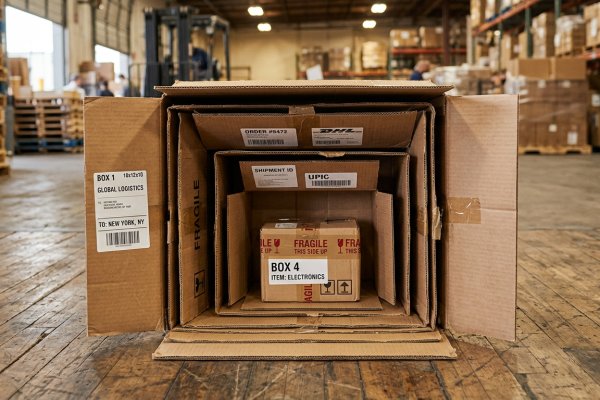
**One SKU per box, or goods bagged into SKUs, is ideal.** If a box contains multiple items, those items must be clearly segregated and identified. For example, if a carton contains 5 different SKUs, each SKU must be in its own separate bag, shipper, or internal packaging, and clearly labelled with the SKU ID on the outside of that bag.
By ensuring that the outer container (be it a box, a bag, or a carton) only contains **one Stock Keeping Unit (SKU)**, you eliminate the need for costly human intervention, keeping your inbound charges at the maximum efficiency rate. This compliance is a small effort on your side that results in significant long-term **cost savings** and **faster lead times** for your stock to go live.
We are not penalising a messy presentation of a single product (a box of 50 loose Red Widgets). We are penalising the time-consuming process of having to physically **segregate mixed products** before they can enter the warehouse flow.
The Trust & Verification Model: Liability vs. Speed
You rightly identified the fundamental conflict in 3PL operations: the need for **speed and low cost** versus the absolute requirement for **accuracy and liability transfer**. As you noted, the packing list is only a guide; we must count because the moment we accept the goods, we assume **responsibility** for that quantity.
Counting vs. Accepting at Face Value
To bridge the gap between necessary counting and ultra-fast processing, Beckdale Shipping operates on a principle of **Trust-Based Verification** for compliant stock. This is why we advise against opening a new, sealed box if it is not necessary.
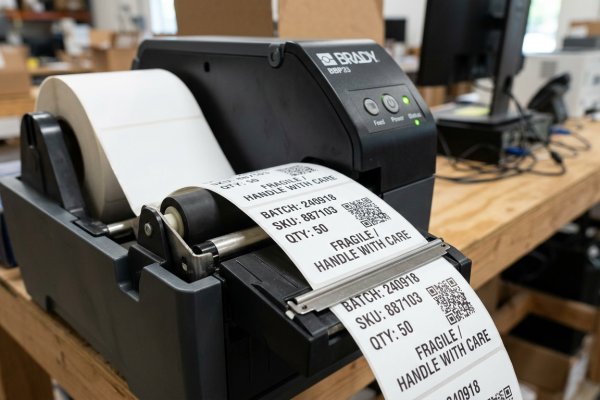
When goods arrive in their **original factory-sealed cartons**, clearly labelled with the SKU and quantity (e.g., "SKU: RED-WIDGET, QTY: 50"), the process changes:
- We count **cartons**, not individual units (10 cartons = 500 units).
- We perform **spot-checks** to verify carton contents and integrity.
- We book the quantity in based on the **face value** of the carton label.
This high-speed approach enables us to book in an entire pallet in minutes, ensuring your goods are ready for sale immediately. This efficiency is a core part of our service as a **UK 3PL** focused on rapid eCommerce fulfilment.
The Point of Verification and Liability
If a carton states 50 units but actually contains 45, the discrepancy is not always caught at Goods-In. This is deliberate. We trust your supply chain and focus on throughput. The discrepancy will only be raised later, typically at the point of **picking** when the final few orders for that SKU cannot be fulfilled.
At that point, the issue is not raised as a 'rework charge,' but as a **Stock Discrepancy**. This effectively pushes the liability and the problem back to the source (your supplier), where it belongs, while ensuring our primary operations (fulfilment speed) are not slowed down by a minute-to-minute count of every single unit in every single box.
Beckdale's Role: We are your **eyes and ears to the goods**. We document all stock discrepancies and communicate them clearly. Our priority is to log the stock quickly and accurately based on the information provided, only physically intervening when compliance breaks down (i.e., when sorting is required).
This system delivers high performance and **ultra-low Goods-In costs** by rewarding accurate suppliers and penalising unnecessary sorting, thus protecting the efficiency that defines Beckdale Shipping.
The True Cost of Friction: Avoiding **Rework Charges**
We believe in maintaining a strong, **collaborative partnership** with every client. Our goal is never to spring a surprise rework fee on you. We aim to 'Discuss and Advise,' not 'Scrutinise,' which is why we proactively explain the conditions that lead to unavoidable labour costs.
What Constitutes a **Rework Charge**?
A rework charge is applied when the stock cannot be processed using our standard, high-speed 'Count & Scan' procedure. This typically happens when the goods are so non-compliant that manual intervention is the only way to get them ready for storage and picking. Examples include:
- A box containing 10 different SKUs mixed loosely together.
- Goods arriving without any clear **SKU identification** (missing barcodes or external labels).
- Pallets requiring extensive re-stacking or skimming due to instability or damage.
In such unavoidable scenarios, you would have to pay for someone to sort it before it's booked in, or expect a slightly higher booking in fee. This charge is calculated based on our standard hourly rate for manual labour, often referred to as **Manual Labour & Rework Charges**. These rates are typically in the range of £25-£30 per person, per hour (PPPH), and are entirely separate from the capped Goods-In fee.
The Partnership Promise: **Discuss and Advise**
Unlike vendors who simply issue a penalty invoice, Beckdale's policy is to approach non-compliance as a solvable problem. We understand that initial shipments from new suppliers can be imperfect. Our commitment is:
We will contact you immediately regarding significant non-compliance and advise on the necessary action. We will always seek your approval before undertaking a rework that incurs a PPPH charge, and we will clearly detail the required standard for future shipments. We will not happily accept inefficiency, but we will always advise how to rectify it rather than simply scrutinise.
This commitment ensures you have a direct line to our operations team to resolve issues, maintaining high standards without damaging the client relationship. This level of partnership is why we are a leading **UK 3PL** choice.
Maintaining Priority: The Hidden Cost of Friction
Even if you are willing to pay the PPPH charge, consistent non-compliance creates **friction** in the warehouse. Your goods take up valuable processing dock time and require specialised labour. While we will never charge you more than the capped fee for compliant stock, consistently creating friction means your goods may be prioritized behind other, more compliant deliveries when the warehouse is busy. Our operational team rewards predictability, which directly translates into **faster lead times** for your stock to move from the loading dock to the picking bin.
Tech Stack Optimisation: The **EOD Stock Sync** Strategy
The physical movement of goods is only half the picture; the integration between your sales platform (Shopify, WooCommerce, etc.) and our Warehouse Management System (WMS) is the other. We employ a data philosophy designed for **stability and accuracy**, which is why our approach to stock synchronisation is different from less disciplined 3PLs.
Why **Continuous Polling is Counter-Productive**
Some providers offer a "real-time" stock sync every 5 minutes. While this sounds good on paper, it is operationally flawed and can lead to overselling. Continuous, high-frequency polling creates unnecessary server load and introduces momentary data errors, which are the root cause of many fulfillment failures.
Beckdale Shipping prefers a strategy of **Intentional Reconciliation**:
- **Order Status Sync:** This happens instantaneously. When an order is dispatched, the WMS immediately pushes the **Fulfilled** status and the **Carrier Tracking Number** back to your sales platform. This is a fundamental, non-negotiable standard for any **UK 3PL**.
- **Stock Level Sync:** This is scheduled for the **End-of-Day (EOD)** or immediately following a **Goods-In** process.
The EOD Advantage: By reconciling stock levels at EOD, we provide a clean, audited snapshot of inventory. Your sales platform manages the stock movement during the day (reducing the displayed quantity as orders come in), and our EOD sync acts as a guaranteed **inventory clean-up and confirmation**, ensuring you start the next day with verified stock levels. This prevents phantom stock errors and ensures you only sell what is physically available in the warehouse.
This strategy allows us to maintain **ultra-fast fulfilment speeds** while providing reliable, single-source inventory data.
The Non-Negotiable of **SKU Mapping**
The most common cause of integration failure is mismatched **SKU Mapping**. The Stock Keeping Unit in your sales platform **must exactly match** the SKU in our WMS. Even a minor difference—a hyphen instead of an underscore, or a leading zero—will cause the WMS to reject the order, leading to delays and administrative intervention.
We strongly advise using our **API to pull your current active SKUs** directly into our system during onboarding. This eliminates the risk of human error during manual entry and ensures a seamless, 'set-and-forget' integration. This simple step is vital for leveraging our position as a **cheap UK 3PL** that prioritizes automated workflow.
Why Beckdale Shipping is the Right Partner for Your Growth
Choosing a **UK 3PL** is about far more than just the headline pick fee; it’s about the hidden costs, the operational transparency, and the reliability of the partnership. At Beckdale Shipping, we have built our model around empowering your growth, not penalising it.
Our commitment is simple:
- **Guaranteed Low Goods-In:** By capping the SKU receipt fee at **£7.00**, we remove the fear of excessive bulk-in charges.
- **Zero Friction Policy:** We offer clear guidelines—the **Single SKU Rule**—to guarantee you avoid hourly rework charges entirely.
- **Reliable Technology:** We favour proven, stable EOD stock synchronization over risky, resource-heavy real-time polling.
- **Genuine Partnership:** We promise to 'Discuss and Advise' on operational improvements, treating you as a collaborative partner, not a transactional vendor.
You have done the hard work of building your brand. Let us handle the logistics with the honesty and efficiency your business deserves.
Ready to move your stock to a reliable, **cheap UK 3PL**? Contact us today to begin your integration and secure your ultra-low fulfilment rates.
Visit our homepage for further details on our ultra-low base pick rates: www.beckdaleshipping.co.uk