Efficient Picking: Delivering Compliance & Speed in Logistics
In today's fast-paced e-commerce landscape, efficient picking isn't just about speed—it's about balancing accuracy, compliance, and customer satisfaction. Whether you're working with Royal Mail, DHL, or managing your own fulfilment operations in Leicester or elsewhere across the UK, understanding the nuances of efficient picking can transform your business performance and dramatically reduce operational costs.
The picking process represents one of the most labor-intensive aspects of warehouse operations, typically accounting for 50-60% of warehouse labor costs. Getting it right means optimizing not just for speed, but for accuracy, regulatory compliance, and seamless integration with carrier requirements.
Understanding Efficient Picking in Modern Fulfilment
Efficient picking refers to the systematic approach of retrieving products from warehouse locations to fulfil customer orders. The methodology you choose can significantly impact your operational throughput, error rates, and ultimately, customer satisfaction.
Core Picking Methodologies
Several picking strategies have evolved to meet different business needs:
- Single Order Picking: Also known as discrete picking, where one picker fulfills one complete order at a time. This method offers high accuracy but lower throughput.
- Batch Picking: Multiple orders are picked simultaneously, with pickers collecting items for several orders in one journey through the warehouse.
- Zone Picking: The warehouse is divided into zones, with dedicated pickers responsible for specific areas, passing orders between zones until completion.
- Wave Picking: Orders are released in waves at scheduled times, allowing for optimized picking routes and consolidation before dispatch.
- Cluster Picking: Similar to batch picking but orders are sorted into individual containers during the picking process itself.
The choice between these methods depends on your order profile, SKU count, warehouse layout, and carrier requirements. In Leicester's thriving logistics sector, businesses are increasingly adopting hybrid approaches that combine multiple methodologies based on order characteristics.
Royal Mail Compliance and Picking Efficiency
When preparing shipments for Royal Mail, efficient picking must account for specific compliance requirements that directly impact both acceptance and delivery success rates.
Dimensional and Weight Accuracy
Royal Mail has stringent requirements regarding package dimensions and weights. Your picking process must ensure:
- Accurate weight capture at the picking stage to determine correct postage bands
- Proper size categorization (Small Parcel, Medium Parcel, Large Letter, etc.)
- Compliance with maximum dimension limits for each service tier
- Correct labeling with Royal Mail-compliant barcodes and addressing
Efficient picking systems integrate weighing and dimensioning technology directly into picking stations, eliminating the need for separate verification steps. This streamlined approach reduces handling time by up to 40% while ensuring Royal Mail compliance from the outset.
Prohibited and Restricted Items
Your picking procedures must include safeguards against accidentally fulfilling orders containing items prohibited by Royal Mail, such as certain lithium batteries, aerosols, or liquids exceeding volume limits. Implementing automated flagging systems during the picking process prevents costly compliance failures and potential fines.
Operations in cities like Manchester, Birmingham, and Leicester have increasingly adopted warehouse management systems (WMS) that automatically cross-reference SKUs against carrier restriction databases during order allocation, preventing non-compliant orders from reaching pickers altogether.
DHL Integration and International Picking Requirements
For businesses shipping internationally through DHL, efficient picking takes on additional complexity requiring meticulous attention to documentation and packaging standards.
Commercial Invoice Preparation
Unlike domestic Royal Mail shipments, DHL international consignments require comprehensive commercial documentation prepared during the picking process:
- Accurate product descriptions for customs purposes
- Correct HS (Harmonized System) tariff codes for each item
- Country of origin declarations
- Individual item valuations for customs clearance
- Dangerous goods declarations where applicable
Leading fulfilment operations integrate this documentation generation directly into their picking workflow. At www.beckdaleshipping.co.uk, pickers use handheld devices that automatically compile customs documentation as items are scanned, eliminating separate administrative steps and reducing dispatch preparation time.
DHL Packaging Standards
DHL maintains specific packaging requirements to ensure shipments survive international transit. Your picking process should incorporate:
- Selection of appropriately rated packaging materials during picking
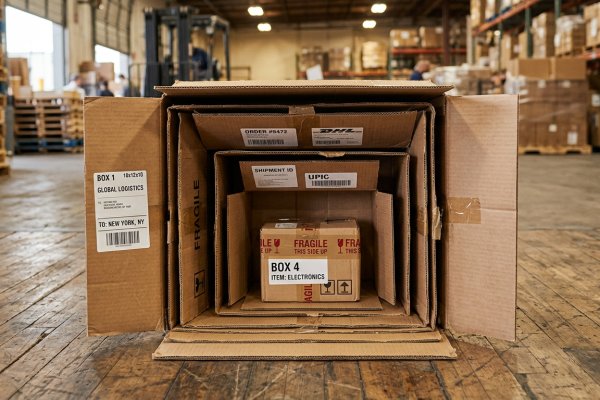
- Flagging of fragile items requiring additional protection
- Identification of items requiring specific orientation or handling
- Integration with DHL's dimensional weight calculation requirements
Efficient pickers in Leicester and throughout the East Midlands logistics corridor are trained to consider packaging requirements during item selection, selecting appropriately sized boxes and protective materials as they pick, rather than making these decisions at a separate packing station.
Leicester's Strategic Logistics Advantage
Leicester has emerged as a significant logistics hub, offering strategic advantages for efficient picking operations. The city's central UK location provides exceptional accessibility to major population centers, with 90% of the UK population reachable within four hours.
Infrastructure Benefits
Leicester's proximity to major transport arteries—including the M1, M69, and excellent rail connections—enables same-day collection services from both Royal Mail and DHL. This geographical advantage means that efficient picking operations can maximize carrier collection windows, often achieving next-day delivery for orders picked as late as 4 PM.
The East Midlands logistics sector has invested heavily in modern warehouse facilities designed specifically for efficient picking. These purpose-built spaces incorporate optimal racking configurations, climate control for product integrity, and floor plans that minimize picker travel distances.
Skilled Workforce Availability
Leicester benefits from a diverse, logistics-experienced workforce. The concentration of fulfilment operations in the region has created a talent pool familiar with multi-carrier compliance requirements and advanced picking technologies. This expertise translates directly into lower error rates and faster training periods for new operations.
While Leicester offers distinct advantages, similar logistics hubs have developed across the UK in locations such as Northampton, Doncaster, and Warrington, each serving regional demand with specialized fulfilment capabilities.
Technology-Driven Picking Optimization
Modern efficient picking relies heavily on technology integration that bridges physical warehouse operations with carrier requirements and customer expectations.
Warehouse Management Systems
Contemporary WMS platforms provide the operational backbone for efficient picking by:
- Optimizing pick paths to minimize travel time and distance
- Dynamically allocating orders to pickers based on skill level and location
- Providing real-time inventory accuracy to prevent pick errors
- Integrating directly with Royal Mail and DHL shipping platforms
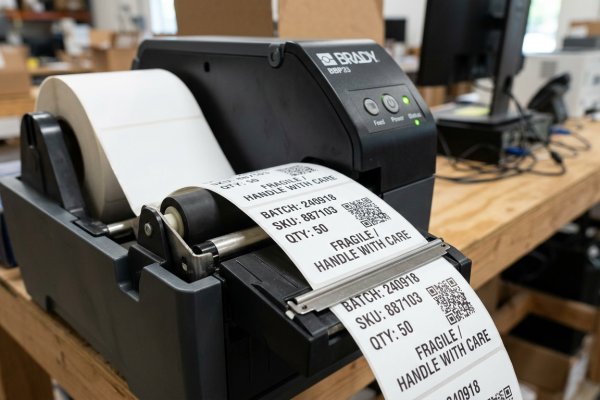
- Generating carrier-compliant labels and documentation automatically
Advanced systems employ artificial intelligence to continuously refine picking routes based on historical data, seasonal product velocity changes, and real-time warehouse congestion. These intelligent routing algorithms can reduce picker travel by 25-35% compared to static picking sequences.
Barcode and RFID Technology
Scanning technology forms the verification backbone of accurate picking. Each item scan confirms correct product selection while simultaneously:
- Updating inventory levels in real-time
- Verifying against order requirements
- Triggering carrier label generation
- Recording audit trails for quality control
RFID technology is increasingly complementing traditional barcoding, particularly for high-value items or those requiring enhanced traceability. The technology enables simultaneous scanning of multiple items, dramatically accelerating verification processes at quality control checkpoints.
Quality Control and Picking Accuracy
Efficient picking must balance speed with accuracy. The cost of picking errors—in returns processing, customer dissatisfaction, and carrier chargebacks—far outweighs the marginal gains from rushed picking processes.
Multi-Stage Verification
Leading operations implement verification at multiple points:
- Pick confirmation: Scanning items as they're selected from locations
- Batch verification: Checking all items in a batch before consolidation
- Pack verification: Final scan before sealing packages
- Ship verification: Confirming correct carrier label application
This layered approach, while adding minimal time per order, reduces error rates to below 0.1% in well-optimized operations—a critical performance metric when dealing with high-volume Royal Mail and DHL shipments.
Measuring and Improving Picking Efficiency
Continuous improvement requires robust performance metrics. Key indicators for efficient picking include:
- Pick rate: Items picked per hour, typically 60-150 for manual operations
- Accuracy rate: Percentage of orders picked correctly, target above 99.5%
- Order cycle time: Complete time from order receipt to carrier handover
- Picker utilization: Productive picking time versus travel and idle time
- Carrier compliance rate: Percentage of shipments accepted without issue by Royal Mail and DHL
Advanced operations at www.beckdaleshipping.co.uk utilize real-time dashboards displaying these metrics, enabling immediate intervention when performance deviates from established benchmarks. This data-driven approach identifies bottlenecks, training opportunities, and process refinement needs.
Future Trends in Efficient Picking
The evolution of picking efficiency continues with emerging technologies promising further optimization:
Autonomous mobile robots (AMRs) are increasingly deployed in larger facilities, bringing products to stationary pickers rather than requiring pickers to traverse the warehouse. This goods-to-person approach can triple pick rates while reducing picker fatigue.
Augmented reality picking glasses provide hands-free picking guidance, overlaying optimal routes and product locations directly in the picker's field of view. Early adopters report 15-20% productivity improvements alongside reduced training requirements.
Predictive analytics enable proactive picking for anticipated orders, positioning inventory and pre-picking popular items before orders are formally received, dramatically reducing order-to-ship times for fast-moving products.
Conclusion
Efficient picking represents the convergence of methodology, technology, compliance awareness, and operational excellence. Whether you're preparing domestic parcels for Royal Mail or international shipments for DHL, optimizing your picking processes delivers measurable improvements in speed, accuracy, and cost-effectiveness.
For businesses operating in Leicester or considering the region for fulfilment operations, the combination of strategic location, skilled workforce, and modern infrastructure provides an ideal foundation for implementing world-class picking operations. The principles of efficient picking—careful methodology selection, technology integration, quality control, and continuous measurement—remain universal regardless of location or scale.
As customer expectations continue to escalate and carrier requirements grow more sophisticated, investing in efficient picking infrastructure and processes isn't merely operational optimization—it's a competitive necessity that directly impacts customer satisfaction, retention, and ultimately, business growth.