Picking Errors Are Killing Your Business!
In the relentless world of e-commerce and B2C fulfilment, efficient picking has emerged as the critical differentiator between thriving businesses and those struggling to survive. Every misplaced item, every incorrect shipment, and every delayed order chips away at customer trust and profitability. As consumer expectations soar and marketplace giants like Amazon set unprecedented standards, the pressure on warehouse operations has never been more intense.
The picking process—selecting and gathering products from storage locations to fulfil customer orders—represents the single most labour-intensive operation in most warehouses, accounting for up to 55% of total operational costs. Yet surprisingly, many businesses still treat it as an afterthought rather than the strategic cornerstone it truly is.
The Hidden Cost of Inefficient Picking
When picking operations falter, the consequences ripple throughout the entire supply chain with devastating effect. Consider the mathematics: a warehouse processing 1,000 orders daily with a 2% error rate ships 20 incorrect orders every single day. That translates to 600 mistakes monthly and 7,200 annually—each requiring customer service intervention, return processing, replacement shipping, and often, a disappointed customer who may never return.
The financial impact extends far beyond immediate replacement costs. Research consistently demonstrates that acquiring a new customer costs five to seven times more than retaining an existing one. When picking errors drive customers away, particularly in the highly competitive B2C marketplace, businesses face compounding losses that extend well into the future.
Speed Versus Accuracy: The False Dichotomy
Many warehouse managers believe they must choose between speed and accuracy in their picking operations. This dangerous misconception has led countless operations to sacrifice accuracy for throughput, only to discover that the resulting errors actually slow down overall performance. Advanced UK fulfilment operations have proven that properly designed systems deliver both speed and accuracy simultaneously.
Amazon's Influence on Picking Standards
Amazon hasn't just raised the bar for delivery expectations—it's fundamentally transformed what customers consider acceptable in every aspect of order fulfilment. The company's obsessive focus on operational excellence has created a new reality where 99.9% accuracy isn't aspirational; it's the minimum acceptable standard.
Whether selling directly through Fulfilled By Amazon (FBA) or managing your own Amazon FBM operations, understanding Amazon's picking philosophy provides invaluable insights. The e-commerce giant employs sophisticated algorithms that optimize pick paths, minimize travel time, and ensure accuracy through multiple verification points.
Amazon Compliance Requirements
For businesses supplying inventory to Amazon's fulfilment centres, compliance with their stringent requirements isn't optional. Amazon's receiving standards demand:
- Accurate labelling: Every unit must feature scannable barcodes meeting Amazon's specifications
- Precise shipment contents: Advance Ship Notices (ASNs) must match physical inventory exactly
- Quality standards: Products must arrive in perfect condition, properly packaged and protected
- Dimensional accuracy: Incorrect size or weight information triggers compliance penalties
- Expiry date management: Products with limited shelf life require specific handling and documentation
Failures in any of these areas result in rejected shipments, financial penalties, and in severe cases, account suspension. Efficient picking systems integrated with robust stock traceability ensure compliance becomes automatic rather than burdensome.
Compliance Beyond Amazon: The Regulatory Landscape
While Amazon's requirements command attention, businesses must navigate an increasingly complex web of compliance obligations across their entire supply chain. From food safety regulations requiring meticulous batch and expiry date tracking to cosmetic industry standards governing beauty product handling, efficient picking systems must accommodate diverse regulatory frameworks.
Industry-Specific Compliance Challenges
Different product categories introduce unique compliance requirements that directly impact picking operations:
Food Products: Temperature-controlled environments, First-Expired-First-Out (FEFO) picking strategies, and allergen segregation create complex operational demands. Warehouses handling food products must maintain impeccable records demonstrating proper handling throughout the picking process.
Fashion and Apparel: Size and colour variations multiply SKU counts exponentially, while seasonal merchandise requires sophisticated inventory rotation. Clothing fulfilment operations must balance trend responsiveness with accuracy across thousands of product variations.
Healthcare and Beauty: Stringent hygiene standards, ingredient restrictions, and packaging integrity requirements demand specialized picking protocols. These sectors cannot tolerate the error rates acceptable in less regulated industries.
Modern Picking Strategies for B2C Excellence
The explosion of direct-to-consumer commerce has fundamentally altered optimal picking strategies. Traditional B2B operations typically involved picking large quantities of limited SKUs for wholesale distribution. Modern UK 3PL providers must now efficiently pick single units across vast product ranges, often shipping hundreds or thousands of individual orders daily.
Discrete Order Picking
The most straightforward approach involves picking all items for a single order before moving to the next. While intuitive and maintaining clear order integrity, discrete picking becomes inefficient as order volumes grow. However, for businesses with modest volumes, specialized products, or extensive customization requirements, this method offers simplicity and accuracy.
Batch Picking
Batch picking groups multiple orders together, allowing pickers to collect the same item for several orders in one trip. This dramatically reduces travel time—often the largest component of picking labour. A picker might gather twenty units of a popular product in a single visit to that location, then distribute them to individual orders during a sorting phase.
This approach particularly suits website fulfilment operations processing high volumes of orders containing similar popular items. The efficiency gains can be remarkable, though the method requires careful implementation to maintain accuracy during the sorting phase.
Zone Picking
Zone picking assigns specific warehouse areas to individual pickers who become experts in their designated zones. Orders pass through multiple zones as different pickers collect the relevant items. This strategy reduces picker training time, minimizes congestion in popular areas, and allows simultaneous picking of different portions of the same order.
Leading UK 3PL fulfilment centres often combine zone picking with sophisticated conveyor systems that transport orders between zones automatically, maximizing throughput while maintaining accuracy.
Wave Picking
Wave picking schedules picking activities in planned waves throughout the day, grouping orders strategically to optimize efficiency. A morning wave might prioritize express shipments requiring same-day dispatch, while afternoon waves handle standard deliveries. This approach allows warehouses to align picking activities with courier services collection schedules and balance workload distribution.
Technology: The Efficiency Multiplier
While methodology matters, technology transforms good picking strategies into exceptional ones. Modern warehouse management systems (WMS) orchestrate picking operations with precision impossible through manual coordination.
Barcode Scanning and Verification
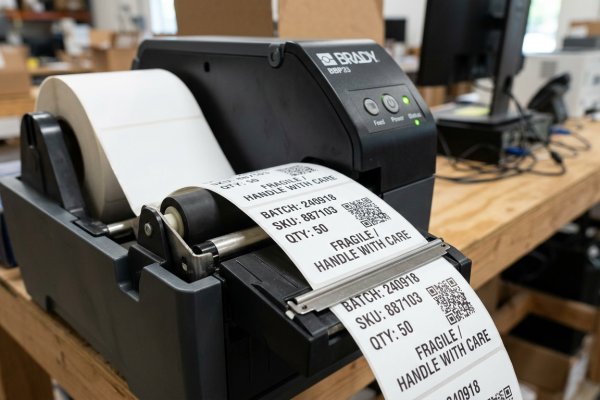
The foundation of accurate picking, barcode scanning provides real-time verification at every step. Pickers scan locations to confirm they're in the right place, scan products to verify they're collecting correct items, and scan orders to ensure proper assembly. This multi-point verification catches errors immediately rather than discovering them at customer doorsteps.
Pick-to-Light and Voice Picking
Advanced systems eliminate paper pick lists entirely. Pick-to-light systems use LED indicators to guide pickers to correct locations and quantities, while voice picking delivers verbal instructions through headsets, leaving hands free for handling products. Both technologies demonstrably improve accuracy while increasing pick rates by 20-40% compared to traditional methods.
Integration and Data Flow
The true power of modern picking systems emerges through seamless data integration. When inventory systems communicate automatically with e-commerce platforms, marketplaces, and shipping services, orders flow through picking operations without manual intervention, eliminating transcription errors and accelerating processing.
Businesses across Manchester, Birmingham, London, and throughout the UK are discovering that robust data integration transforms picking from a labour-intensive bottleneck into a smooth, scalable operation.
Building Supply Chain Resilience Through Picking Excellence
Recent supply chain disruptions have highlighted the critical importance of operational resilience. Efficient picking systems contribute significantly to supply chain strength by:
- Improving inventory visibility: Real-time tracking during picking provides accurate stock levels
- Enabling rapid response: Flexible picking strategies adapt quickly to changing demand patterns
- Supporting multiple channels: Unified systems handle retail, wholesale, and direct-to-consumer orders seamlessly
- Facilitating quality control: Picking verification catches product issues before shipment
Forward-thinking businesses recognize that their UK warehouse operations represent a competitive advantage rather than merely a cost centre. When picking excellence becomes embedded in operational DNA, the entire supply chain performs more reliably.
Implementing Efficient Picking: Practical Steps
Transforming picking operations doesn't require complete warehouse redesigns or massive capital investments. Strategic improvements deliver measurable results:
- Audit current performance: Measure pick rates, accuracy, and identify specific bottlenecks
- Optimize warehouse layout: Position fastest-moving items in most accessible locations
- Standardize processes: Develop clear picking procedures and train staff thoroughly
- Implement verification systems: Even basic barcode scanning dramatically improves accuracy
- Monitor and refine continuously: Review metrics regularly and adjust strategies based on data
Many businesses find that partnering with experienced UK fulfilment specialists in locations like Leicester provides immediate access to optimized picking systems without the learning curve and capital investment of building internal capabilities.
The Future of Picking Excellence
As customer expectations continue rising and competition intensifies, efficient picking transforms from operational detail to strategic imperative. Whether you're managing B2B fulfilment, scaling B2C operations, navigating Amazon's demanding ecosystem, or ensuring regulatory compliance across complex supply chains, picking excellence provides the foundation for sustainable growth.
The question isn't whether to optimize picking operations—it's whether you'll lead the efficiency revolution or struggle to keep pace with competitors who already have.