In the fast-paced world of e-commerce, efficient picking has emerged as the critical differentiator between businesses that thrive and those that struggle to keep pace with customer expectations. Whether you're managing an eBay storefront from your spare room or overseeing enterprise-level operations across multiple warehouses, the ability to retrieve, pack, and dispatch orders quickly and accurately directly impacts your bottom line, customer satisfaction, and long-term sustainability.
The picking process—seemingly straightforward at first glance—represents a complex orchestration of human movement, inventory management, technology integration, and carrier coordination. When optimized correctly, efficient picking can reduce operational costs by up to 40%, minimize shipping errors, and create the seamless customer experience that modern consumers demand.
Understanding the Fundamentals of Efficient Picking
At its core, picking is the process of retrieving items from inventory locations to fulfil customer orders. However, the sophistication of this process varies dramatically depending on business scale, product variety, and order volume. The journey from a customer clicking "buy now" on eBay to a DPD driver delivering their package involves numerous critical decision points where efficiency can be gained or lost.
The Four Primary Picking Methods
Successful fulfilment operations typically employ one or more of these established picking methodologies:
- Single Order Picking: The most straightforward approach where one picker completes one order at a time. Ideal for small operations and businesses with low order volumes or highly customized products.
- Batch Picking: Multiple orders are picked simultaneously in a single pass through the warehouse. This method significantly reduces travel time and is particularly effective for businesses handling similar products across multiple orders.
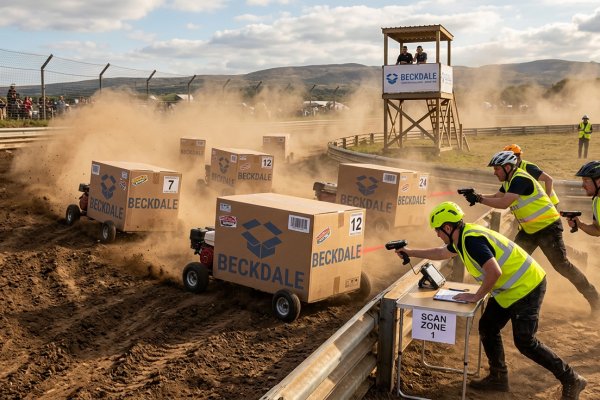
- Zone Picking: The warehouse is divided into zones, with dedicated pickers assigned to specific areas. Orders move between zones until complete, maximizing picker familiarity with their designated inventory.
- Wave Picking: Orders are released in scheduled waves throughout the day, typically coordinated with carrier collection times. This approach allows for strategic coordination with postage requirements and courier schedules.
The eBay Seller's Journey: Scaling from Bedroom to Business
For countless entrepreneurs, eBay represents the gateway to e-commerce success. What begins as selling unwanted items from the spare bedroom can rapidly evolve into a thriving business requiring sophisticated fulfilment strategies. The transition from casual seller to professional operation demands a fundamental reimagining of the picking process.
In the early stages, single order picking suffices. You receive a notification, locate the item, pack it carefully, print your postage label, and schedule collection or drop it at the post office. However, as daily orders climb from single digits to dozens or hundreds, this approach becomes unsustainable.
When eBay Sellers Need to Evolve Their Picking Strategy
Smart eBay sellers recognize critical inflection points that demand operational changes. When you find yourself spending more time walking around your storage area than actually packing, when orders regularly miss same-day dispatch cutoffs, or when picking errors lead to negative feedback—these are clear signals that your picking methodology needs upgrading.
Many successful sellers transition to batch picking as their first optimization step. By grouping orders with similar items or destinations, they can dramatically reduce the time spent traversing their storage space. This approach pairs particularly well with DPD's flexible collection services, allowing sellers to coordinate picking waves with scheduled collection times.
Businesses operating in Manchester, Birmingham, London, and other major urban centers often find that proximity to carrier hubs enables same-day or next-day delivery promises—but only when picking efficiency supports rapid order processing. Even operations based in Leicester, like www.beckdaleshipping.co.uk, can leverage strategic picking methods to meet aggressive delivery timelines nationwide.
Integrating Postage and Carrier Requirements into Picking Workflows
One of the most overlooked aspects of efficient picking is the integration of postage and carrier requirements into the picking process itself. Too often, businesses treat picking and shipping as separate functions, leading to bottlenecks, redundant handling, and missed collection windows.
DPD Integration: A Case Study in Carrier-Centric Picking
DPD has established itself as a premium carrier option, particularly for businesses promising precise delivery windows and comprehensive tracking. However, maximizing the value of DPD's services requires picking strategies that align with their collection schedules and service level requirements.
Smart picking systems can prioritize orders based on postage service level during the picking process itself. For instance, DPD Next Day orders might be picked first in a morning wave, ensuring they're ready for the earliest collection slot. Express services receive priority routing to pickers, while standard services can be batched more flexibly throughout the day.
Forward-thinking operations implement packaging decision points directly into their picking workflows. Rather than picking items and then determining appropriate packaging, efficient systems identify packaging requirements upfront. This is particularly crucial when coordinating with carriers like DPD, where dimensional weight pricing and packaging specifications directly impact postage costs.
Postage Cost Optimization Through Strategic Picking
The relationship between picking efficiency and postage costs extends beyond simple speed considerations. Strategic picking workflows can identify opportunities for:
- Consolidating multiple items into single parcels rather than separate shipments
- Selecting packaging that minimizes dimensional weight charges
- Routing orders to the most cost-effective carrier based on destination and service level
- Identifying orders eligible for letter post versus parcel services
These decisions, made during or immediately after picking, can reduce overall postage expenditure by 15-25% compared to operations that treat picking and shipping as entirely separate functions.
Enterprise-Level Picking: Scaling Efficiency Across Multiple Channels
When businesses reach enterprise scale—whether through organic growth or multi-channel expansion—picking efficiency becomes exponentially more complex and critical. Enterprise operations typically manage inventory across multiple locations, fulfil orders from various sales channels simultaneously, and coordinate with numerous carriers including DPD, Royal Mail, and specialized freight services.
Technology Infrastructure for Enterprise Picking
At the enterprise level, warehouse management systems (WMS) become non-negotiable. These sophisticated platforms orchestrate the entire picking process, from order import through multiple channels (including eBay, Amazon, proprietary websites, and wholesale orders) to final dispatch confirmation and tracking upload.
Modern WMS solutions employ algorithms that consider numerous variables when generating pick lists:
- Order priority based on service level agreements and postage commitments
- Picker location and current workload distribution
- Inventory location and optimal travel paths through the warehouse
- Carrier collection schedules and cutoff times
- Packaging requirements and consolidation opportunities
Enterprise operations in distribution hubs across Leeds, Bristol, Glasgow, and throughout the UK rely on these systems to maintain picking accuracy rates above 99.5% while processing thousands of orders daily. The integration between picking systems and carrier platforms like DPD's shipping API enables seamless label generation, tracking number assignment, and manifest creation without manual intervention.
The Human Element in Enterprise Picking
Despite technological advances, human pickers remain central to most fulfilment operations. Ergonomic considerations, training protocols, and performance management directly impact picking efficiency at enterprise scale.
Progressive enterprises invest in comprehensive training programs that cover not just the mechanical aspects of picking but also the reasoning behind route optimization, quality control checkpoints, and the downstream impact of picking errors. When a picker understands that a mistake on an eBay order could result in negative feedback affecting the entire business, or that a missed DPD collection causes a cascading delay in customer delivery, they become partners in operational excellence rather than mere task executors.
Cross-Channel Considerations: eBay, Enterprise Systems, and Everything Between
Modern commerce rarely exists in a single channel. An eBay seller who achieves success typically expands to Amazon, creates a Shopify storefront, or develops wholesale relationships. Each channel introduces unique picking challenges and opportunities.
eBay orders often involve single-item picks with customer-specific delivery preferences. Enterprise wholesale orders might require case-quantity picks with different packaging standards. Coordinating these varied requirements within a unified picking workflow demands sophisticated orchestration.
Successful multi-channel operations typically implement channel-specific picking zones or prioritization rules. For instance, platforms like www.beckdaleshipping.co.uk enable businesses to configure picking workflows that automatically route eBay orders to single-item picking stations while directing bulk wholesale orders to pallet-picking areas.
Measuring and Optimizing Picking Performance
Continuous improvement in picking efficiency requires robust metrics and regular analysis. Key performance indicators for picking operations include:
- Picks per hour: The fundamental productivity metric, typically ranging from 60-100 for single-order picking to 200+ for optimized batch picking
- Pick accuracy: Should consistently exceed 99.5% to maintain customer satisfaction and minimize costly returns
- Travel distance per order: Indicates warehouse layout efficiency and picking route optimization
- Orders picked by carrier cutoff time: Directly impacts postage costs and delivery promises
- Cost per pick: Comprehensive metric incorporating labor, technology, and overhead expenses
Regular analysis of these metrics, combined with continuous testing of alternative picking methods, enables businesses to identify optimization opportunities. Even marginal improvements—reducing average travel distance by 10% or increasing picks per hour by 15%—compound into substantial cost savings and capacity increases over time.
The Future of Efficient Picking
As e-commerce continues its explosive growth, picking efficiency will only increase in importance. Emerging technologies including robotic picking assistants, augmented reality picking guidance, and AI-driven route optimization promise further efficiency gains.
However, the fundamental principles remain constant: understand your products, know your customers' expectations, coordinate with your carriers including DPD and others, and continuously refine your processes. Whether you're an eBay seller shipping ten orders daily or an enterprise operation processing thousands, efficient picking remains the backbone of fulfilment success—the invisible process that transforms digital transactions into satisfied customers and sustainable business growth.