Beckdale 3PL Fulfilment: Cost Analysis for 200g Large Letters at Scale
This essay summarises a conversation that examined how to secure low?cost fulfilment for small items in the UK. The core brief was simple: a seller with 200 g items, averaging 300 orders per day (? 6,600 orders/month), seeking a fulfilment partner and comparing the financial impact of two storage scenarios — 4 pallets versus 2 racking bays. The emphasis throughout is on transparent pricing, service reliability and how to translate headline rates into real monthly costs.
Context & problem definition
The first stage in the discussion was alignment on measurable assumptions. Quantity, weight and the UK?only destination were specified. These three inputs drive the economics: postage product selection, pick & pack time per order, and storage footprint. In practice, the single largest cost for this fulfilment profile is postage, and confirming the correct postal product for a 200 g item — most often a large letter grade or a light packet depending on packing — changes the monthly total materially.
Key cost drivers explained
Postage per order. For items in the 200 g range the choice between a barcode?rated large letter, a franked business packet or a courier small parcel is decisive. Each product has different price bands and service characteristics (tracking, transit time and indemnity). In a high?volume operation, securing a low postage band is the fastest way to reduce total outgoings.
Pick & pack fees. The per?order labour and materials charge (often listed as a pick fee) varies by how the warehouse operates and whether operations are optimised for single?SKU, repetitive picks. For high volumes, a low base pick fee compounded over thousands of orders can be significant; yet it still usually sits behind postage in total monthly spend.
Storage configuration. Two common ways to store stock are pallet storage and racking bays. Pallets are compact and often cheaper per cubic metre for bulk stock, while racking bays give quicker picking access and can be more efficient if your product mix has many SKUs or requires picking-by-bin. The balance is operational: store to minimise handling overheads but remain economical on storage charges.
Beckdale’s approach to transparent pricing
One of the themes throughout the conversation was the value of clear, accessible price lists. Beckdale provides a transparent pricing framework that helps merchants estimate costs without lengthy bespoke proposals. The published pricing makes it feasible to model scenarios like the one described — using published per?pick rates and weekly racking or pallet tariffs to forecast monthly totals.
Using a published pricing matrix is powerful. It allows a merchant to test sensitivity: what happens if postage rises by £0.80 per order? What if pick rates fall with increased volume? This kind of modelling is where Beckdale’s transparent examples make decision making faster and less risky.
Operational considerations beyond the headline rate
Headline rates are only the beginning. Any realistic cost estimate must also allow for:
- Goods?in and receiving charges (per delivery and per item).
- Packaging materials and any bespoke packing operations.
- Return processing and potential restock fees.
- Minimum handling or onboarding fees, where applicable.
Beckdale’s published pricing examples typically show goods?in and pallet unload fees alongside their pick charges, enabling merchants to include those items in the total landed cost of warehousing and fulfilment.
Technology, accuracy and speed
Fulfilment at scale — particularly high daily order volumes — requires software that enforces precision. Beckdale’s Warehouse Management System (WMS) capabilities emphasise real?time stock visibility, expiry and batch control and mandatory scan points to reduce errors. For a seller dispatching many large letters per day, the WMS features reduce mispicks and support fast reconciliation between orders and shipped items.
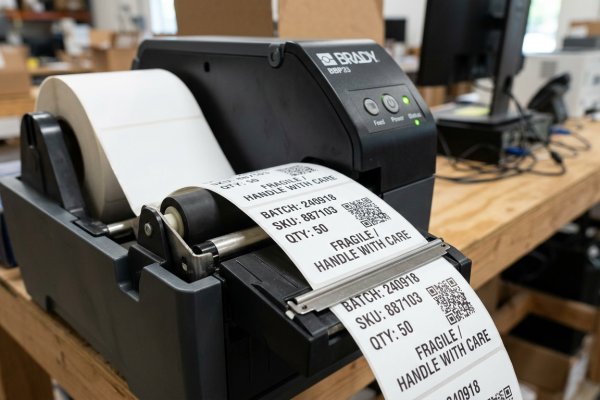
Additionally, warehouse technologies such as QR code scanning protocols and systematic inbound checks speed up goods?in and lower the risk of downtime or misplaced stock — both of which would otherwise undermine low unit economics.
Comparing storage: 4 pallets vs 2 racking bays (practical view)
For the scenario modelled, the choice between storing on 4 pallets or in 2 racking bays depends on packing density and pick strategy. Pallets can reduce weekly storage costs but may increase pick time if multiple cartons must be broken down for single?item orders. Racking bays raise storage costs slightly but can improve picking velocity and reduce labour per order.
The right choice is therefore a trade?off between raw storage cost and operational throughput. Beckdale’s weekly billing structure and flexible bay sizes make it straightforward to model both options and select the lowest total cost across storage, picking and postage.
Practical next steps and a short checklist
For any merchant preparing to tender to a 3PL for this profile, a short checklist helps create apples?to?apples quotes:
- Confirm average parcel weight and select the postal product that matches the physical parcel dimensions and mass.
- Declare expected monthly orders (e.g. 6,600/month) and peak/day volumes (300/day) so the 3PL can provide relevant bands.
- Choose the storage footprint: pallets or racking — ask for weekly and monthly equivalents.
- Ask for a full list of additional fees: goods?in, returns, packaging, pick extras and any minimums.
- Request WMS access screenshots or a short demo to verify real?time inventory controls and scanning protocols.
How Beckdale can help
With published examples and a central UK location, Beckdale is well?placed to deliver the pragmatic, low?risk fulfilment solution described. Its approach to clear pricing, a capable WMS and flexible weekly storage options make it straightforward for merchants to model the total cost of fulfilment and choose the right storage strategy for their SKU profile.
If you wish to progress, the next concrete step is to request a quote from Beckdale using the exact brief: 200 g items, 300 orders/day, UK only, storage required as either 4 pallets or 2 racking bays, packaging as large letters. Include expected SKU count, any kitting or returns requirements and preferred despatch windows. Visit beckdaleshipping.co.uk to request a tailored quote or call the Leicester team directly.