Shopify Order Fulfilment: The Hidden Costs Killing Your Profit
Running a successful Shopify store requires more than just great products and clever marketing. Behind every customer order lies a complex fulfilment process that can make or break your business profitability. Many Shopify merchants discover too late that inefficient order fulfilment is silently eroding their margins, with postage costs, warehouse inefficiencies, and poor logistics planning draining thousands of pounds annually.
Understanding the intricacies of Shopify order fulfilment—from selecting the right postage options to implementing efficient UK Fulfilment systems—is essential for sustainable growth. This comprehensive guide explores the critical components that directly impact your bottom line and reveals strategies to transform your fulfilment operation from a cost centre into a competitive advantage.
The Royal Mail Postage Dilemma for Shopify Merchants
Royal Mail remains the backbone of UK ecommerce shipping, handling millions of Shopify orders annually. However, navigating Royal Mail's service tiers represents one of the most challenging aspects of Shopify order fulfilment. The difference between selecting the correct postal service and the wrong one can mean the difference between profit and loss on each transaction.
Understanding Royal Mail Service Options
Shopify merchants must carefully evaluate which Royal Mail services align with their business model. The primary options include:
- Royal Mail 24 and 48: Standard tracked services offering next-day or two-day delivery with basic compensation coverage
- Royal Mail Tracked 24 and 48: Enhanced tracking with SMS and email notifications, providing better customer experience
- Royal Mail Special Delivery Guaranteed: Premium next-day service with time-specific options and higher compensation limits
- International Services: Multiple tiers for overseas orders, from International Standard to International Tracked and Signed
The challenge lies not just in selecting services but in optimizing postage costs against customer expectations. Manchester-based Shopify stores might find different optimal solutions compared to retailers in Birmingham or London, depending on their customer base distribution and product characteristics.
Postage Cost Optimization Strategies
Smart Shopify merchants employ several tactics to minimize postage expenses without compromising delivery quality. Volume discounts through Royal Mail's business accounts can reduce per-item costs by 15-30%, while implementing dimensional weight calculations prevents overpaying for lightweight but bulky items.
Working with a specialized UK 3PL provider often unlocks better Royal Mail rates through consolidated shipping volumes. Many Leicester-based fulfilment operations, for example, achieve pricing tiers that individual Shopify merchants simply cannot access independently.
Picking Bins: The Foundation of Efficient Order Processing
While glamorous marketing campaigns capture attention, the humble picking bin represents one of the most crucial elements in your Website Fulfilment operation. These unassuming storage containers directly impact picking speed, accuracy rates, and ultimately customer satisfaction.
Designing an Effective Picking Bin System
Professional picking bin configurations consider multiple factors beyond simple storage. Optimal systems incorporate:
- Product velocity analysis: Fast-moving items positioned in easily accessible picking bins at waist height
- Dimensional optimization: Bin sizes matched to product dimensions, minimizing wasted space and search time
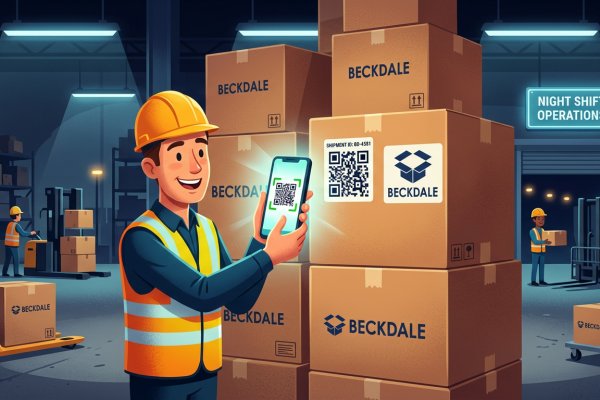
- Clear labelling systems: SKU-based identification with barcodes enabling rapid scanning and verification
- Logical grouping: Related products stored proximally, reducing picker travel distance
A well-designed picking bin system can reduce order processing time by 40-60%. For Shopify stores processing hundreds of daily orders, this translates to substantial labour cost savings and increased throughput capacity.
Technology Integration with Picking Bins
Modern fulfilment operations increasingly integrate picking bins with digital systems. API Data Integrations connect Shopify order data directly to warehouse management systems, which then generate optimized picking routes through your bin locations.
Pick-to-light systems illuminate specific bins when items are required, while mobile scanning devices confirm correct product selection before items leave picking bins. These technologies dramatically reduce picking errors—a critical consideration when studies show that correcting fulfilment mistakes costs 8-12 times more than preventing them initially.
Palletisation: Scaling Your Shopify Fulfilment Operation
As Shopify stores grow from processing dozens to hundreds or thousands of daily orders, palletisation becomes essential for managing inventory efficiently. Understanding when and how to implement pallet-based storage separates scaling businesses from those that plateau due to operational constraints.
When Palletisation Makes Financial Sense
Not every Shopify merchant requires palletised storage immediately. The transition typically makes sense when:
- Individual SKUs exceed 100 units in regular stock holdings
- Products arrive from suppliers in pallet quantities
- Warehouse space costs justify vertical storage optimization
- Order volumes require bulk picking followed by sorting operations
Businesses across Bristol, Leeds, and Glasgow increasingly adopt palletisation as they scale, often working with specialized Shipping Services providers who understand the logistics of pallet handling.
Palletisation Best Practices for Ecommerce
Effective palletisation requires more than simply stacking boxes. Professional operations implement:
- FIFO inventory rotation: First-in-first-out systems preventing stock aging, particularly crucial for Food Products and Beauty items
- Pallet location systems: Digital tracking of pallet positions within warehouse zones
- Mixed pallet strategies: Combining slow-moving SKUs on shared pallets to optimize space
- Replenishment triggers: Automated alerts when picking bin stock requires pallet-to-bin transfers
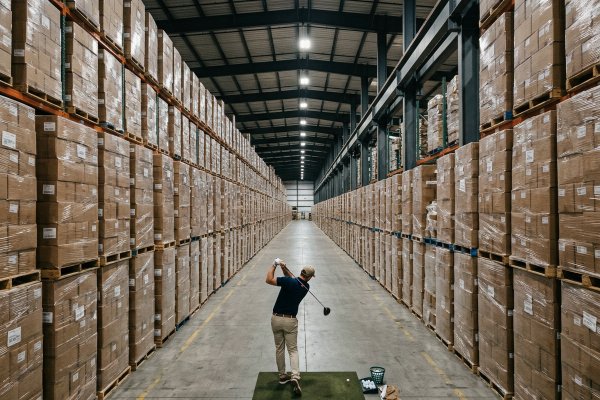
The relationship between palletised storage and picking bins creates a two-tier inventory system. Bulk stock remains on pallets in high-bay storage, while active picking bins contain working quantities for immediate order fulfilment. This separation optimizes both storage density and picking efficiency.
Integrating All Elements: A Cohesive Fulfilment Strategy
The true power emerges when postage optimization, picking bin efficiency, and palletisation work as integrated components rather than isolated elements. A UK 3PL Fulfilment operation achieves this through systematic planning and technology implementation.
The Order Fulfilment Workflow
An optimized Shopify fulfilment process follows this sequence:
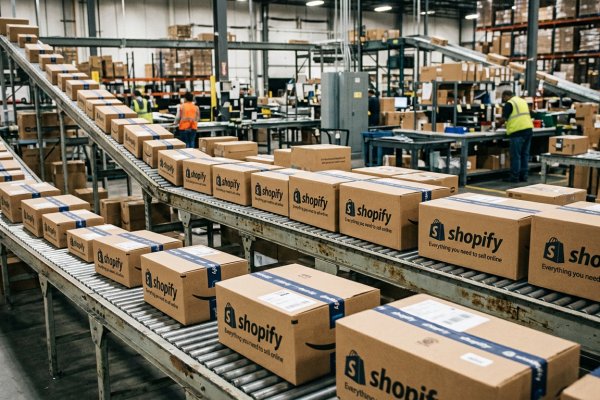
- Order receipt: Shopify order data automatically transmits to warehouse management system
- Pick list generation: System creates optimized picking routes through bin locations
- Item retrieval: Warehouse staff collect products from designated picking bins
- Quality verification: Barcode scanning confirms correct items and quantities
- Packaging selection: Appropriate materials chosen based on product characteristics and Royal Mail specifications
- Postage application: Correct Royal Mail service selected based on destination, weight, and customer preferences
- Dispatch processing: Orders consolidated for Royal Mail collection or courier pickup
Each step presents opportunities for cost reduction and efficiency gains. Successful Shopify merchants continuously analyze this workflow, identifying bottlenecks and implementing improvements.
Cost-Benefit Analysis: In-House vs. Outsourced Fulfilment
Many Shopify store owners face the critical decision between managing fulfilment internally or partnering with a specialist provider. The calculation extends beyond simple per-order costs to encompass:
- Warehouse lease commitments and utility expenses
- Staffing costs including recruitment, training, and management overhead
- Equipment investments in picking bins, pallet racking, and handling machinery
- Technology systems for inventory management and order processing
- Royal Mail contract negotiations and volume discount access
- Liability for inventory damage, loss, or fulfilment errors
Professional Fulfilment Warehouse operations spread these fixed costs across multiple clients, often achieving 20-40% cost advantages compared to individual merchants operating independent facilities. This explains why rapidly growing Shopify stores frequently transition from in-house fulfilment to specialized providers at the 500-1,000 monthly order threshold.
Location Considerations for UK Shopify Fulfilment
Warehouse location significantly impacts both postage costs and delivery speeds. Central UK locations offer optimal coverage for nationwide shipping, with midlands-positioned facilities reaching most UK addresses within Royal Mail's 24-hour service windows.
Shopify merchants serving customers across Edinburgh, Cardiff, Newcastle, and Southampton benefit from centrally-located fulfilment partners in Leicester that minimize average shipping distances. This geographical advantage translates directly to reduced postage costs and improved delivery performance—two factors increasingly important to customer satisfaction and repeat purchase rates.
Regional Fulfilment Network Considerations
Some high-volume Shopify operations eventually implement multi-location fulfilment strategies, positioning inventory in different UK regions. However, this approach introduces complexity in inventory allocation, typically requiring sophisticated systems to prevent stockouts while maintaining efficiency across locations.
For most Shopify merchants, a single strategically-positioned UK Warehouse provides optimal balance between cost control and service quality. The complexity and expense of multi-site operations generally only justifies itself at extremely high order volumes or when serving international markets requiring overseas fulfilment centers.
Future-Proofing Your Shopify Fulfilment Operation
The ecommerce landscape continuously evolves, with customer expectations rising and competitive pressures intensifying. Forward-thinking Shopify merchants build fulfilment operations capable of adapting to changing requirements.
Scalability Planning
Effective fulfilment strategies accommodate growth without requiring complete operational overhauls. This means:
- Selecting Courier Services partners who offer multiple service tiers as needs evolve
- Implementing picking bin systems that can expand modularly as SKU counts increase
- Establishing palletisation capabilities before absolute necessity forces rushed implementation
- Choosing technology platforms with API integration capabilities for future system connections
Specialty Fulfilment Requirements
Different product categories present unique fulfilment challenges. Clothing items require different handling than electronics, while Food Products demand temperature control and expiry date management. Understanding these specific requirements when designing your fulfilment strategy prevents costly operational changes later.
Conclusion: Mastering Shopify Fulfilment for Sustainable Growth
Successful Shopify order fulfilment requires mastery of interconnected elements—from selecting appropriate Royal Mail postage services to implementing efficient picking bin systems and scaling through palletisation. Each component directly impacts profitability, customer satisfaction, and competitive positioning.
The merchants who thrive recognize that fulfilment excellence provides sustainable competitive advantage that marketing campaigns alone cannot deliver. By optimizing postage costs, implementing professional picking bin systems, and scaling intelligently through palletisation, Shopify stores transform fulfilment from a necessary expense into a profit-driving operational strength.
Whether managing fulfilment in-house or partnering with specialized providers, the principles remain constant: systematic planning, continuous optimization, and strategic investment in systems that support scalable growth. The hidden costs of inefficient fulfilment stop being hidden—and stop killing profits—when merchants apply the comprehensive strategies outlined in this guide.
For Shopify merchants serious about building sustainable, profitable businesses, fulfilment excellence isn't optional—it's the foundation upon which everything else is built.