3PL Revolution: How D2C Brands Are Transforming UK Commerce
The landscape of British retail has undergone a seismic shift in recent years. The rise of Direct-to-Consumer (D2C) brands, coupled with the explosive growth of online marketplaces like eBay, has created unprecedented opportunities for entrepreneurs and established businesses alike. At the heart of this transformation lies a critical component that many successful brands leverage: third-party logistics, or 3PL services. From bustling cities like Sheffield to Leicester and beyond, businesses are discovering that partnering with the right UK 3PL provider can be the difference between scaling successfully and drowning in operational complexity.
Understanding the 3PL Advantage in Modern Commerce
Third-party logistics providers have evolved far beyond simple warehouse storage. Today's UK fulfilment operations represent sophisticated ecosystems that handle everything from inventory management to last-mile delivery. For D2C brands, this evolution couldn't have come at a better time.
When you're selling directly to consumers, whether through your own website, eBay, or multiple channels simultaneously, the logistics puzzle becomes increasingly complex. Every order needs to be picked, packed, and dispatched with precision. Returns must be processed efficiently. Inventory levels require constant monitoring. For a growing business, managing these operations in-house can quickly consume resources that would be better spent on product development, marketing, and customer acquisition.
The D2C Revolution and Its Logistics Demands
D2C brands face unique challenges that traditional retail models never encountered. Speed, accuracy, and presentation have become non-negotiable expectations. Customers who purchase directly from brands expect:
- Rapid dispatch times, often same-day or next-day shipping
- Pristine packaging that reflects brand values
- Accurate order fulfilment with minimal errors
- Seamless returns processes
- Real-time tracking and communication
Meeting these expectations while maintaining profitability requires infrastructure, systems, and expertise that most brands simply don't possess internally. This is where Business to Consumer fulfilment specialists provide immeasurable value.
eBay Sellers: The Original D2C Pioneers
Long before Instagram brands and Shopify stores dominated the D2C conversation, eBay sellers were pioneering direct-to-consumer commerce. Sheffield, with its strong entrepreneurial heritage, has produced countless successful eBay businesses over the years. These sellers understand better than most that logistics efficiency directly impacts profitability.
For eBay sellers operating at scale, the decision to partner with a UK warehouse provider often comes at a critical inflection point. When you're shipping ten items per day, managing stock from your spare room might work. When you're shipping a hundred items daily, that model collapses rapidly.
How 3PL Services Transform eBay Operations
Professional fulfilment services offer eBay sellers several competitive advantages:
- Bulk shipping discounts: 3PL providers negotiate carrier rates that individual sellers could never access
- Faster dispatch times: Professional warehouse teams can process orders within hours of receipt
- Inventory visibility: Real-time stock management prevents overselling and stockouts
- Scalability: Handle peak seasons without hiring temporary staff or renting additional space
- Geographic advantages: Strategic warehouse locations reduce delivery times across the UK
Many eBay power sellers in Sheffield and across the UK have discovered that outsourcing fulfilment actually reduces their per-unit costs while improving customer satisfaction metrics. This combination creates a powerful competitive moat that's difficult for slower-moving competitors to overcome.
The Beckdale Price Calculator: Demystifying 3PL Costs
One of the biggest obstacles preventing businesses from exploring UK 3PL fulfilment options is cost uncertainty. Traditional fulfilment pricing has been notoriously opaque, with hidden fees and complex tier structures making true cost comparison nearly impossible.
This is where innovative tools like the Beckdale pricing calculator represent a genuine breakthrough. By providing transparent, itemised cost projections, such calculators allow businesses to make informed decisions based on actual data rather than vague estimates.
What the Price Calculator Reveals
A comprehensive 3PL pricing calculator should break down costs across several key categories:
- Storage fees: Typically charged per pallet or cubic metre, varying by product type
- Pick and pack charges: Per-item fees for order processing
- Shipping costs: Actual carrier rates plus any handling fees
- Additional services: Contract packing, labelling, or quality control
- Integration fees: Costs associated with connecting your sales channels to the warehouse management system
By inputting your specific business metrics—average order value, monthly volume, product dimensions, and storage requirements—you can generate realistic cost projections. This transparency allows for meaningful ROI calculations. Many businesses discover that the all-in costs of professional fulfilment warehouse services are actually lower than their current in-house operations when you factor in rent, labour, equipment, and shipping discounts.
For businesses exploring options, reviewing pricing examples from actual client scenarios can provide valuable benchmarks and help identify potential cost-saving opportunities specific to your product category.
Regional Perspectives: The Sheffield Connection
Sheffield's transformation from steel city to a thriving hub of creative and digital businesses mirrors the broader shift toward D2C commerce. The city's entrepreneurs have embraced online selling, with many building successful brands that ship nationally and internationally.
For Sheffield-based businesses, partnering with strategically located UK fulfilment providers offers distinct advantages. While Beckdale operates from its Leicester facility, the central UK location provides excellent transport links to Sheffield and throughout the country. This geographic positioning ensures that whether your customers are in Edinburgh, Cardiff, or London, delivery times remain competitive.
Why Location Still Matters in Digital Commerce
Despite the digital nature of modern retail, physical geography profoundly impacts fulfilment performance. A centrally located warehouse provides:
- Reduced average delivery distances to UK customers
- Lower shipping costs due to optimised routing
- Faster delivery times that enhance customer satisfaction
- Easier access for stock deliveries and quality checks
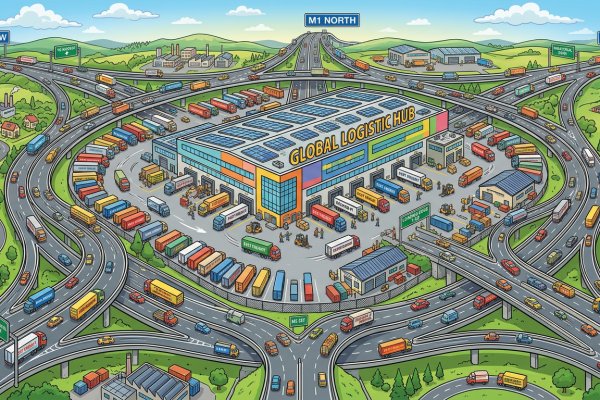
Sheffield businesses shipping nationally benefit from partnering with Leicester-based operations, as the M1 corridor provides seamless connectivity. Meanwhile, the growing e-commerce sectors in Manchester, Birmingham, and Leeds all find similar advantages in centrally positioned warehouse fulfilment partners.
Integrating 3PL Services Across Sales Channels
Modern D2C brands rarely sell through a single channel. A typical growth trajectory might begin with eBay, expand to Amazon through FBM services, add a Shopify store, and potentially include wholesale B2B fulfilment as the brand matures.
Managing inventory and fulfilment across these diverse channels creates significant complexity. Professional 3PL providers solve this through sophisticated data flow integrations that synchronise stock levels, route orders appropriately, and maintain consistent service levels regardless of purchase channel.
The Multi-Channel Advantage
When your fulfilment partner handles multiple sales channels from a single inventory pool, several benefits emerge:
- Inventory efficiency: No need to maintain separate stock for different channels
- Reduced stockouts: Centralized inventory reduces the risk of channel-specific shortages
- Consistent branding: Same packaging and presentation regardless of purchase source
- Simplified accounting: Single relationship for all fulfilment activities
- Scalability: Add new channels without proportional increases in operational complexity
Specialized 3PL Services for Product Categories
Not all products have identical fulfilment requirements. Temperature-sensitive beauty products, fashion items requiring careful presentation, and food products with strict traceability requirements each demand specialized handling.
Quality 3PL providers develop expertise in specific categories. Beauty and skincare fulfilment requires climate-controlled storage and gentle handling. Clothing distribution benefits from presentation-focused packing that maintains brand premium positioning. Food products demand rigorous batch and expiry date management.
For D2C brands, partnering with a provider that understands your specific product category eliminates a steep learning curve and prevents costly mistakes that could damage your brand reputation.
The Future of D2C and 3PL Partnership
As consumer expectations continue evolving, the role of website fulfilment providers will only grow more critical. Emerging trends include same-day delivery in major metropolitan areas, sustainable packaging solutions, and increasingly sophisticated personalization in the unboxing experience.
For ambitious D2C brands and eBay sellers alike, the question is no longer whether to partner with a 3PL provider, but rather which partner best aligns with your growth trajectory, product category, and customer expectations.
Tools like transparent pricing calculators have removed much of the uncertainty from this decision. Combined with flexible agreements and proven stock traceability systems, the barrier to entry has never been lower for businesses seeking to professionalize their fulfilment operations.
Taking the Next Step
Whether you're a Sheffield entrepreneur shipping your first hundred eBay orders monthly, or an established D2C brand processing thousands of website transactions, the fundamental fulfilment challenges remain similar. The businesses that thrive are those that recognize when operational tasks should be delegated to specialists, freeing leadership to focus on growth, product innovation, and customer relationships.
The transformation from bedroom eBay seller to professionally fulfilled D2C brand represents more than operational evolution—it's a fundamental shift in business maturity. By leveraging professional courier services, sophisticated inventory management, and strategic warehouse partnerships, businesses position themselves for sustainable growth regardless of market conditions.
The 3PL revolution isn't coming—it's already here. The only question is whether your business will lead the transformation or struggle to catch up. For those ready to explore what professional fulfilment could mean for their operations, transparent pricing tools and specialist providers like www.beckdaleshipping.co.uk offer a clear path forward without the traditional risks and uncertainties that once made outsourcing seem daunting.
The future of D2C commerce belongs to brands that combine compelling products with flawless execution. In an era where customer expectations have never been higher and competition never more fierce, your fulfilment partner isn't just a vendor—they're a strategic asset that can accelerate growth or constrain it. Choose wisely, and the possibilities are limitless.